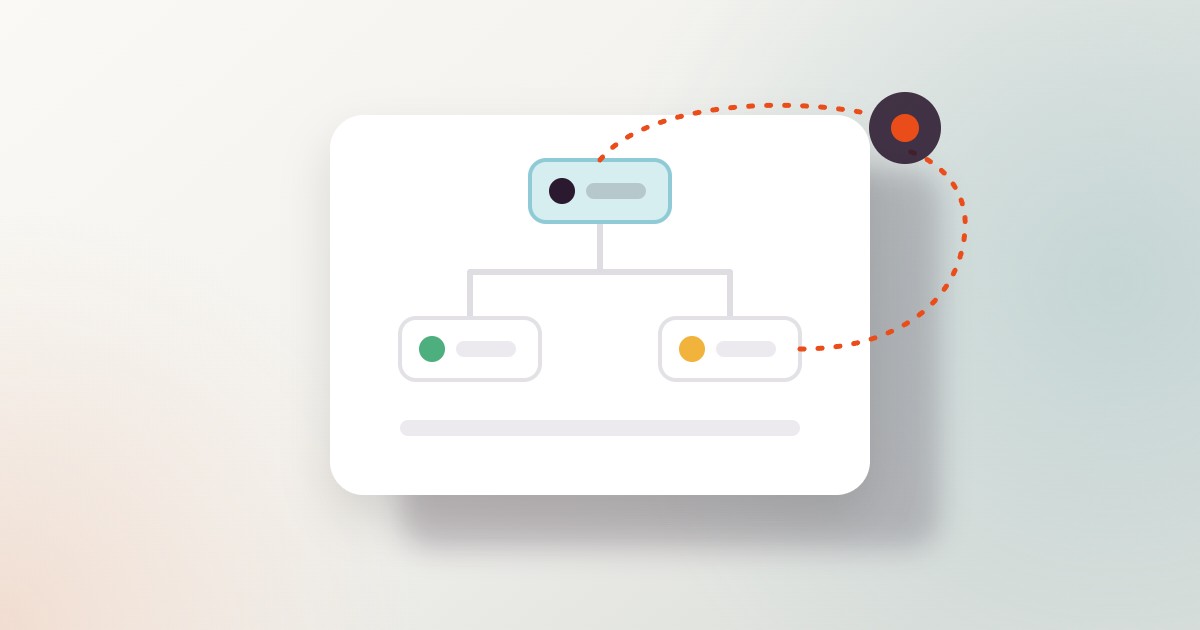
Every company has its official image – the way it presents itself to the outside world. As it begins to professionalize, it develops an organizational chart, procedures, job descriptions, values, and a strategy laid out in a presentation.
But every company also has another, invisible layer: power dynamics, unspoken agreements, and unwritten rules that actually determine how things get done.
The BOOM model calls this second layer the shadows of the organization. These are not crises that are immediately visible, but quiet patterns that can persist beneath the surface for years. They are particularly difficult to recognize because they are not documented in internal policies, yet everyone can sense them in the corridors.
They’ve left the office, but not the decision-making
One of the common shadows in family businesses appears when the founder formally retires, but never really leaves. The owner hands over the CEO role, steps back from the paperwork, but the phone still rings for him before the new leadership, and important decisions still need his “yes” before they become real. The new management then operates with the authority it formally holds but without the mandate it truly feels, because employees quickly learn that the real person to address is still someone else.
Instead of ensuring continuity, this informal power quietly undermines the authority of those who have officially taken charge, and the organization remains trapped between two chains of command: the one that exists on paper and the one that actually functions.
Who is valued more in the eyes of the organization?
Another shadow grows out of the way a company, often unconsciously, ranks its people. Sales or production deliver visible results: an order, a product, revenue. They are therefore easily perceived as the heart of the company.
Accounting, IT, and HR, on the other hand, are often viewed as costs that merely support the “real” business activities in the background. This distinction is rarely stated openly, but it can be felt in the tone people use when speaking to different colleagues, in whose meetings are canceled first when things get busy, whose suggestions are taken seriously, and whose are dismissed as “administration.”
When support functions begin to operate more slowly or become more distant, it is rarely a matter of laziness. More often, it is the result of a message repeated over many years: their contribution is simply not considered equally valuable.
The paradox is that these very functions keep the system running. Without sound accounting, functional infrastructure, and healthy people processes, neither sales nor production would have a foundation on which to operate.
When the boss’s mood sets the pace of work
The third shadow I want to discuss stems from changes in mood that a manager brings to work, which employees pick up on before the manager has even said a word.
In the corridors, the same information circulates every day: whether the manager seems to be in a good mood or is looking grim. The entire team adjusts its behavior accordingly.
If the manager looks grumpy, an unspoken agreement spreads that it is better not to approach them that day. Questions and approvals waiting for their “yes” are put aside for another day.
If the manager is in a good mood, employees recognize an opportunity and rush to take advantage of the moment to get the information, signature, or decision they need to continue their work.
When bad days become too frequent, this is no longer just about the atmosphere in the corridor. Bottlenecks begin to emerge in production because work is not held up by a lack of resources or planning, but by waiting for the right moment to approach the right person.
Shadows don’t form overnight
What all these shadows have in common is that they rarely exist as a single dramatic event. They are made up of small, repeated moments that accumulate into a culture no one deliberately designed.
The BOOM model therefore does not look for someone to blame; it seeks to name what is happening. Until the informal influence of a retired owner, the devaluation of support functions, or the intrusion into personal privacy is recognized and openly acknowledged, these patterns will continue to shape the organization quietly, outside the strategy management has laid out, no matter how flawless that strategy may look on paper.
Naming the problem to find a solution
Working with organizational shadows is challenging because it means exposing something that has been kept in the shadows.
Once a shadow is brought to light and spoken about openly, the problem is on the table. The BOOM methodology does not seek to assign blame, but to find solutions.
Often, those solutions take the form of new agreements, processes, or clearly defined boundaries. Boundaries are necessary, even if not everyone finds them comfortable.